Leak testing Zurich - certified to SN EN 1610
We test your sewer line to SN EN 1610 and issue a recognised test protocol - for building permits, insurers and authorities.
What is a leak test?
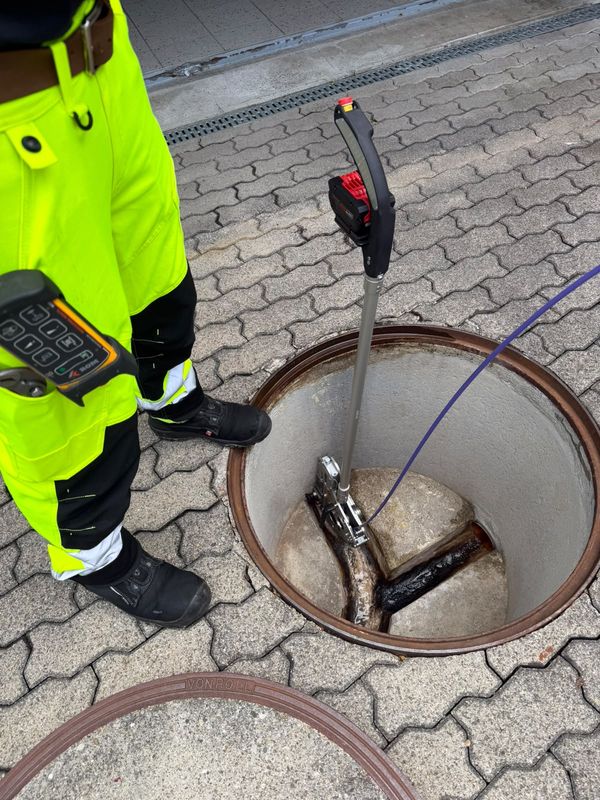
A leak test verifies that drain lines are free of leaks through which wastewater could escape into the ground or the groundwater. Testing is carried out to SN EN 1610, which prescribes exact procedures, pressure levels and limit values. The test protocol is the official evidence accepted by building authorities, municipalities and insurers.
We test in line with the specifications applicable in Switzerland (SN EN 1610, VSA guidelines and cantonal water protection ordinances) and give you the cost in writing before the test.
A leaky sewer system is not only an environmental problem. It can lead to ground settlement, undermining of foundations and considerable follow-on damage to buildings. Timely leak testing detects weak points before they become costly.
Greentech Solutions carries out leak tests for private lines, house connections and municipal networks. Our specialists are familiar with the cantonal requirements and issue the standard-compliant protocol immediately after the test - so your project can proceed without delay.
So funktioniert es
Unser bewährter Prozess - transparent und effizient von Anfang bis Ende.
- 1
Pre-briefing
Alignment on the test scope, the affected line segments and the normative requirements with the client.
1 - 2
Preparation
Isolating the line segments to be tested, introducing the test media and installing the measuring equipment.
2 - 3
Pressure test
The leak test is carried out with air or water in line with SN EN 1610 - controlled, documented and reproducible.
3 - 4
Evaluation
The measurement data are evaluated on-site - immediate feedback on whether the test is passed or rework is needed.
4 - 5
Test protocol
A standard-compliant test protocol is issued with all measurement values, limit values and the test result - recognised by authorities and insurers.
5
Who is this for?
Private households (new build)
Watertightness evidence for your new drainage installation - so everything is tight at first occupancy and no follow-on damage occurs.
Property management
Standard-compliant test protocols as evidence for building permits, acceptance and handovers. On schedule and reliable, also for architects and site managers.
Industrial / gastronomy
Systematic testing of drain lines under commercial loading (grease, oil, chemicals) in line with statutory monitoring duties. Documentation for authorities included.
Your benefits
We combine technical expertise with transparency — so you always know what to expect.
- SN EN 1610 certified - recognised by authorities and insurers
- Immediate test protocol after the measurement
- Recognised for building permits and acceptance
- Air or water pressure test depending on the requirement
- Immediate on-site feedback on the test result
- Combinable with inspection and rehabilitation
Recommended maintenance intervals
Regular maintenance saves money in the long run and prevents emergencies.
| Measure | Interval | Mandatory? |
|---|---|---|
| Sewer flushing (SFH) | every 5–10 years | Recommended |
| Sewer flushing (MFH / commercial) | every 2–5 years | Recommended |
| CCTV inspection | every 10 years | Depends on canton |
| Leak testing | every 10–15 years | Yes (GSchV) |
| Grease-trap emptying | every 1–3 months | Yes (gastronomy) |
| Oil-separator servicing | twice a year | Yes (industrial) |
PDF DOWNLOAD
Construction-project checklist — sewer works
Standards, cost ranges, hand-over checklist and maintenance intervals — 12 pages of practical know-how for your next project.
Häufige Fragen
What is SN EN 1610?
SN EN 1610 is the Swiss standard for the construction and testing of drains and sewers. It sets the requirements for leak testing and defines the limit values for air and water pressure tests. The SN EN 1610 protocol is recognised by authorities and insurers.
When is a leak test required?
In many cantons a leak test is required for new construction, rehabilitation, line replacement, or on the instruction of the municipality. A standard-compliant test is also recommended when a leak is suspected or after a damage event.
How much does a leak test cost?
Cost depends on line length, pipe diameter and accessibility. After a brief pre-clarification we prepare a transparent quote - with no hidden costs.
What happens if the line does not pass the test?
If the line does not pass the leak test, we locate the leak and recommend the appropriate rehabilitation measure. We then run a re-test and issue the protocol after successful rehabilitation.
What are the legal requirements?
In Switzerland, the watertightness of drain lines is regulated in the Federal Water Protection Act (GSchG) and in cantonal water protection ordinances. Municipalities can require periodic tests. The SN EN 1610 protocol is the recognised evidence of compliance with these requirements.
How long does a leak test take?
A house connection is typically tested in a few hours. On-site evaluation means the client learns the result immediately, without waiting for a lab report.
Air pressure or water pressure test?
The choice depends on line length, diameter and access conditions. SN EN 1610 allows both. Air pressure is faster and requires less water logistics; water pressure is used for larger diameters and specific documentation requirements.
Can leak testing be combined with cleaning and inspection?
Yes. In many cases we combine leak testing with pre-cleaning and a TV inspection to SN EN 13508-2. This provides a complete picture of pipe condition and watertightness in a single site visit.
Jetzt kostenlose Offerte anfragen
Unverbindlich und innerhalb von 24 Stunden
Thank you, we will get back to you within 24 hours.
Request a detailed quoteDringend? Rufen Sie uns direkt an - wir sind 24/7 erreichbar.
044 500 92 05 24/7 Notfalldienst